← All projects

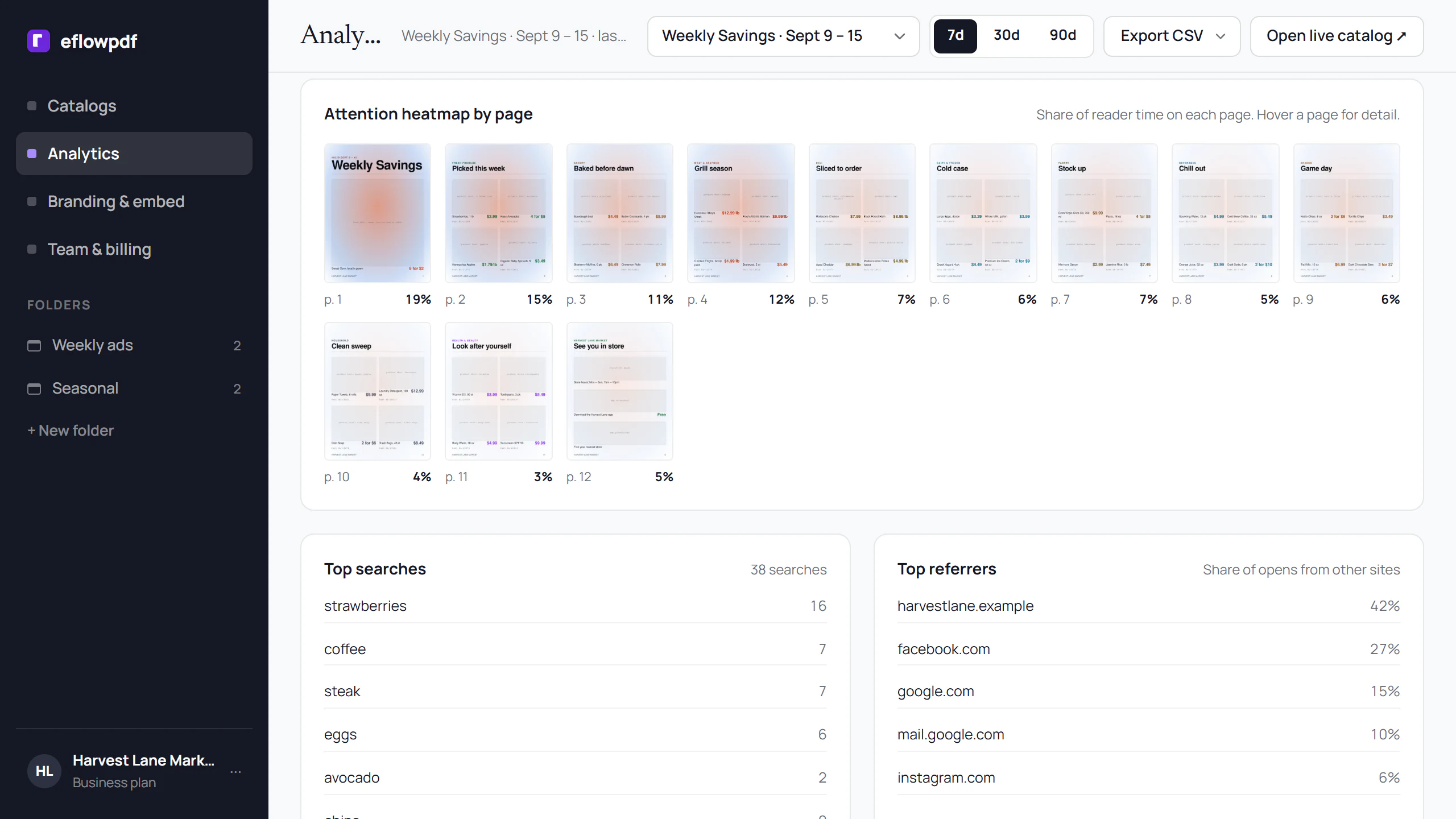
A PDF catalog publishing platform that turns uploaded documents into branded, page-flipping readers with clickable product hotspots, search, and page-level analytics. Publishers can share a link, embed a catalog, or use their own domain.

Role
Product design, full-stack engineering, and infrastructure
Delivery
Self-hosted VPS + Docker
Availability
Public product
Rendering
Poppler to WebP at four widths

How it works

DASHBOARD + PDF WORKERPDF uploadresumableRenderpoppler · pdf.jsHotspotslinks · part numbersSnapshotfrozen on publishReadersubdomain · embedCookieless analyticsEFLOWPDF / PDF TO SHOPPABLE READER

Swipe to see the whole system

  1. The PDF stays the source

    Publishers keep designing in the tools they already use. Uploading a new PDF creates a new version, and the PDF's own links and bookmarks become hotspots and contents.

  2. Readers see only published work

    The reader reads frozen snapshots, so editing hotspots or replacing the PDF changes nothing for readers until the next publish.

  3. Analytics without tracking

    Visitors are counted with a hash whose random salt rotates daily and is deleted after two days, so a reader cannot be followed across days or workspaces. IP addresses are never stored.

The problem

Retailers and distributors still design their weekly ads and product catalogs as PDFs. Posting the file gives shoppers a slow download with nothing to click, and the publisher learns nothing about what was read. Flipbook services fix the reading but hold the catalog on their platform and often track readers with cookies.

My approach

eflowpdf takes the PDF as it is. A sandboxed worker renders every page to images and extracts the text and the PDF's own links, the publisher adds hotspots in an editor that can find part numbers automatically, and publishing freezes the result into a snapshot that a branded reader serves on a workspace subdomain, a custom domain, or an embed. Reader analytics are collected without cookies.

Engineering scope

  1. One Next.js 16 app serving the marketing site, dashboard, reader, and API by hostname, with Better Auth workspaces and four member roles
  2. BullMQ workers on Valkey: a PDF worker with no internet access running poppler, pdf.js, and sharp under CPU and memory caps, and a second worker for email and per-minute analytics rollups
  3. PostgreSQL 18 with Drizzle, monthly analytics partitions, full-text page search, and Caddy issuing certificates on demand for verified custom domains