← All projects

A private-alpha browser infrastructure project for AI agents: isolated browser sessions behind scoped tokens, one-use connection grants, and filtered egress. Its three-worker pool runs locally but is not yet deployed; persistent profiles and richer evidence capture remain on the roadmap.

Role
Product design, platform engineering, and security architecture
Delivery
Self-hosted VPS + Docker
Availability
Preview / private access
Workers
Three isolated Steel browsers

How it works

PRIVATE YARDAgentPlaywright · CDP · MCPControl APIscoped tokenGatewayone-use grantSteel worker1 of 3, leasedEgress proxychecks each destinationAllowed webRefusedprivate · off-listTABYARD / AGENT TO PUBLIC WEB

Swipe to see the whole system

  1. No raw endpoints

    Agents never see worker IDs, debugging URLs, or proxy credentials. The gateway resolves the internal endpoint only after it has consumed a valid grant.

  2. Fail closed

    Workers have no direct route to the internet. Destinations are resolved and checked before the proxy connects, and private networks are refused.

  3. Status you can trust

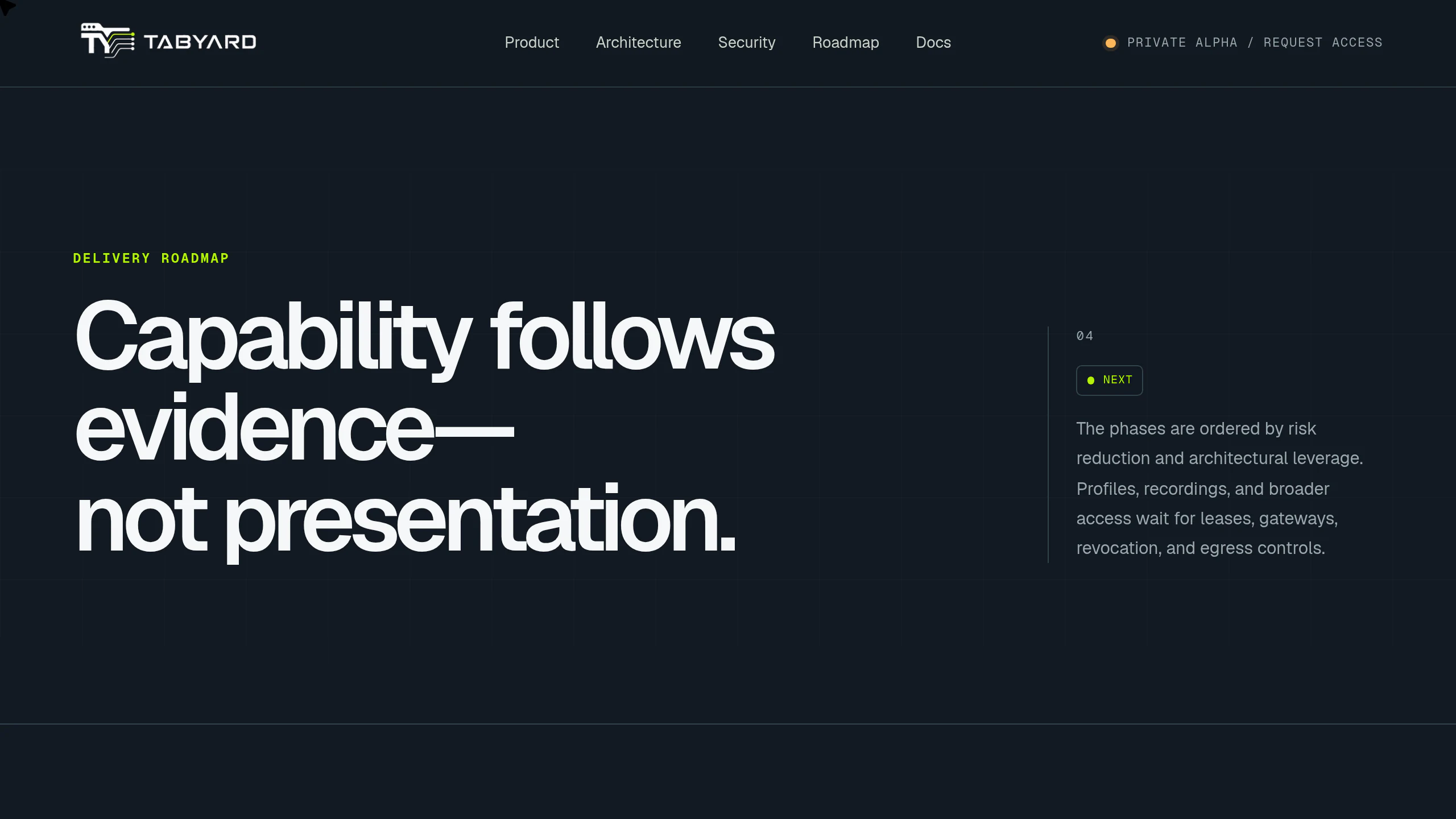
    Capabilities are published as Complete, In validation, Next, Planned, or Deferred, without usage metrics, customer logos, or anti-detection claims.

The problem

AI agents need real browsers, but giving an agent a browser usually means a raw debugging port, an open network, and a machine nobody can audit. Hosted browser services take away the operations work, but they also move sessions, cookies, and traffic onto someone else's infrastructure.

My approach

Tabyard runs a small pool of isolated Steel browsers on hardware the operator controls. Agents get scoped tokens with limits, each session is leased to one worker, connecting takes a signed one-use grant through a gateway, and every request leaves through an egress proxy that checks the destination first. The public site labels every capability by status rather than promising more than exists.
Engineering scope

  1. TypeScript control API, connection gateway, and egress proxy with PostgreSQL leases, idempotency records, and audit events
  2. Three Steel workers on separate internal networks, each capped at 3 GiB of memory and two CPUs, with health-based drain and quarantine
  3. Ed25519-signed 60-second connection grants, hashed agent tokens with rotation and revocation, and an MCP surface limited to allowlisted metadata