← All projects

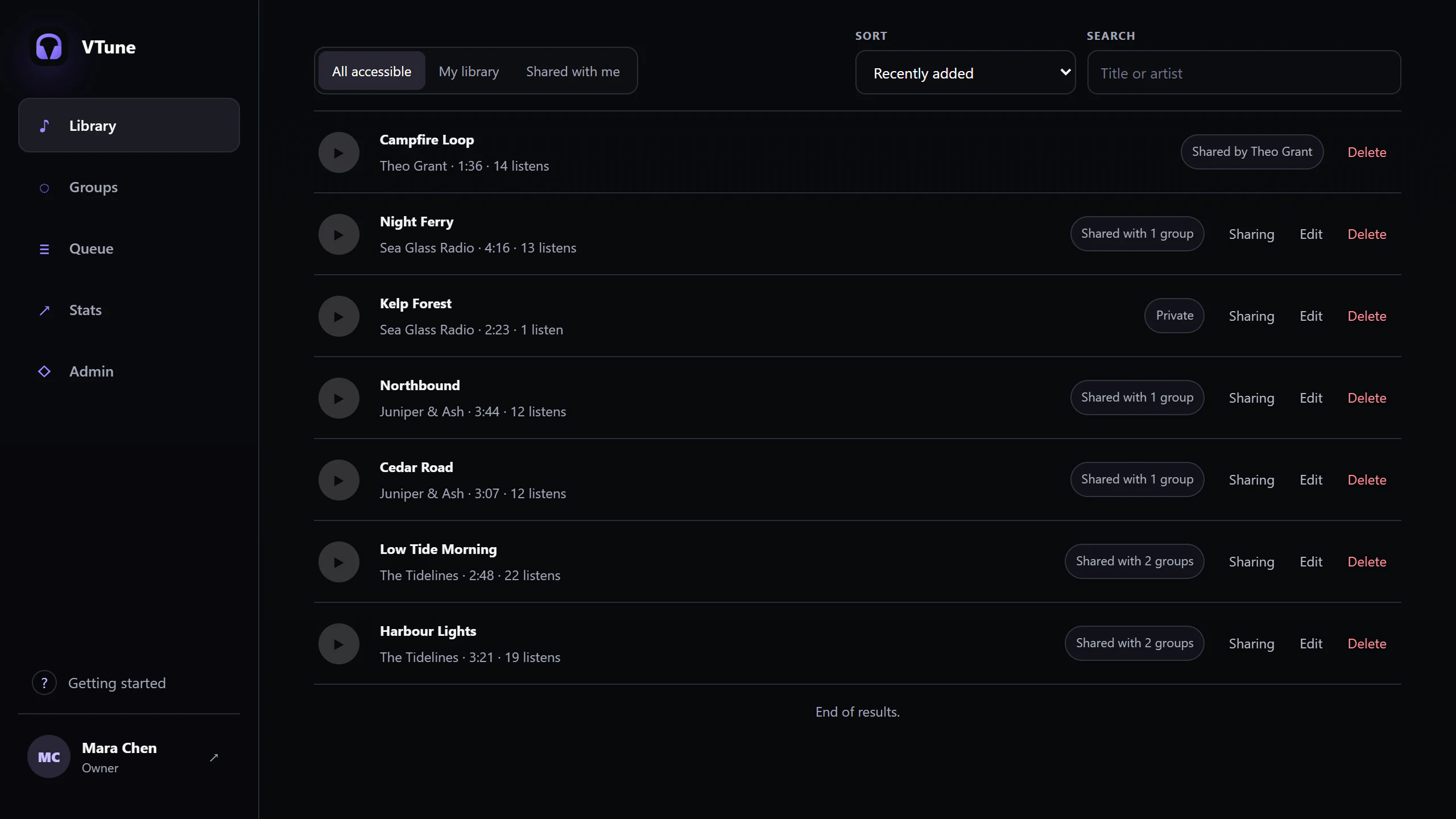
A self-hosted Discord music system with private libraries, invite-only sharing groups, resilient uploads and conversion, and a live web queue for each listening room.

Role
Product design, full-stack engineering, and self-hosted operations
Delivery
Self-hosted VPS + Docker
Availability
Preview / private access
Library
Private per member, with quotas

How it works

SELF-HOSTED VTUNEUpload4 MiB chunksConvert192 kbps OpusLibraryprivate by defaultGroup grantsQueuechecked at play timeDiscord voicethe listening roomVTUNE / UPLOAD TO LISTENING ROOM

Swipe to see the whole system

  1. Private until shared

    Uploads belong to one member. Sharing is an explicit grant to a group, and one song can be granted to several groups without storing a second copy.

  2. Access is checked when it matters

    Requests are authorized when queued and again at playback, and active queues are revalidated after membership, sharing, deletion, or suspension changes.

  3. Uploads that survive real life

    Files move in resumable 4 MiB chunks, staged progress lives in SQLite, and a refresh or restart picks up where the transfer left off.

The problem

Friends who listen together in Discord often want their own music in the room: rehearsal takes, rare recordings, songs they own. Public music bots stream from public sources, so personal files end up passed around as links, with no say over who can play them or when that access ends.

My approach

VTune gives each member a private library on a self-hosted server and plays it into Discord voice. Songs stay private until their owner grants them to an invite-only group, and every request is checked again when it plays, so leaving a group or deleting a song takes effect immediately, even in a queue.
Engineering scope

  1. Fastify, SQLite, and Discord.js service with a React and Vite dashboard and live updates over server-sent events
  2. ffprobe validation and a single serial conversion worker producing 192 kbps Ogg Opus, with per-member storage quotas
  3. Discord OAuth accounts, single-use invitations, group roles, an audit history, and AMD64 and ARM64 container builds