ReflexQR

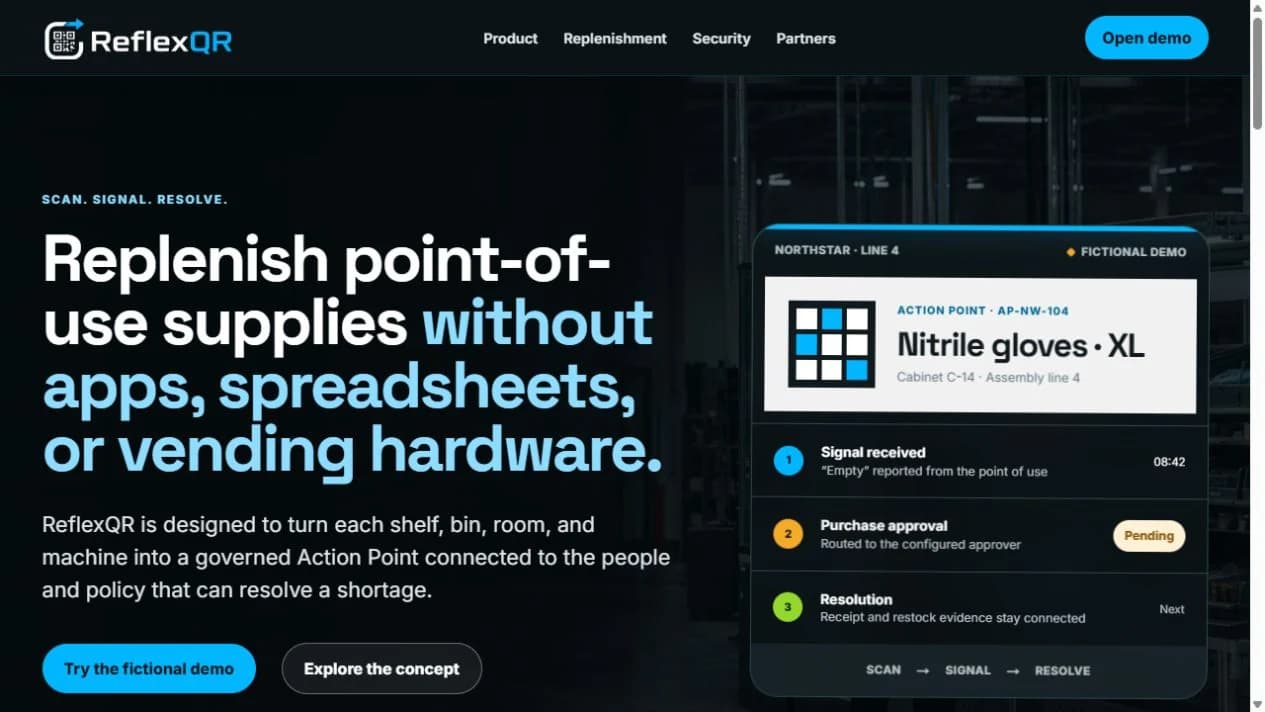
A public concept demo for point-of-use operations: explore fictional scan-to-resolution workflows in the browser. The demo does not create accounts or submit real requests.

Role
Product design, full-stack engineering, and workflow architecture
Delivery
Self-hosted VPS + Docker
Status
Active showcase
ReflexQR public concept demo showing a fictional replenishment signal and its scan-to-resolution stages.

01 / How it works

The system, drawn end to end.

ROUTED WORKFLOWSScanQR at the point of workAction Pointshelf · bin · room · machineRoutetenant rulesReplenishMaintainEscalateResolvedauditable outcomeREFLEXQR / SIGNAL PATH
  1. 01

    Fast at the point of work

    The scan experience asks only for the context needed to start the right operational response.

  2. 02

    Ownership stays visible

    Routing, status, and responsibility remain clear after the initial request leaves the physical location.

  3. 03

    Auditability is a feature

    Every signal can be followed from scan through action and final resolution.

02 / The problem

The operating problem behind the interface.

Operational issues often begin at a physical point—a shelf, bin, room, or machine—but are reported through disconnected messages and spreadsheets. That makes ownership, progress, and resolution difficult to trace.
03 / The approach

A product model designed around the decision.

The public ReflexQR demo uses fictional Action Points to illustrate a request moving from a physical location through routing and resolution. It runs in the browser without creating accounts or submitting real requests; the application architecture described below is separate from that demo.

04 / Engineering scope

The system behind the product surface.

  1. 01Next.js and React interfaces for public scans and authenticated operations
  2. 02Fastify and PostgreSQL application boundary for multi-tenant workflow state
  3. 03BullMQ background processing and Docker-based production services