The problem
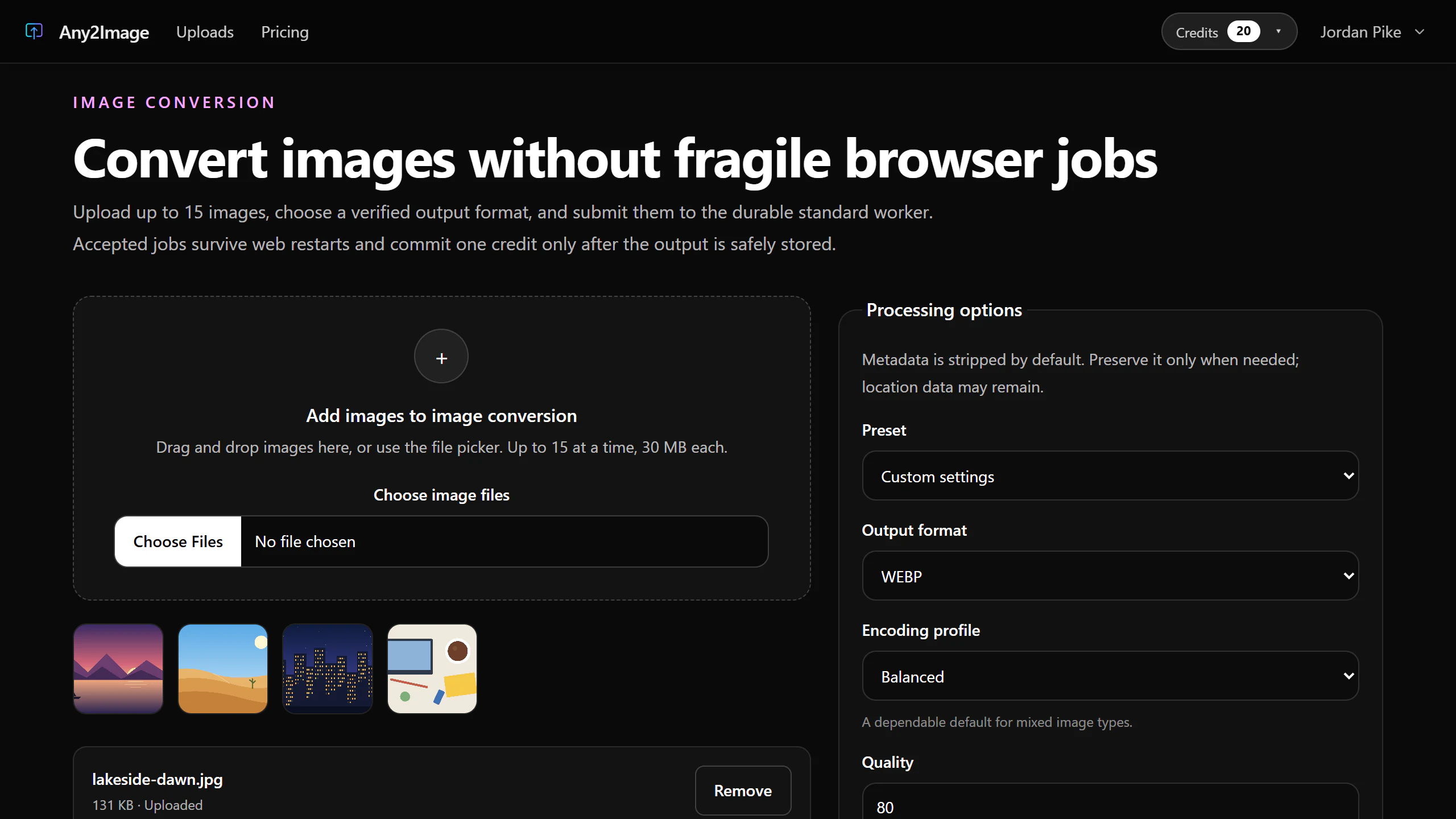
Browser-based image tools tend to process inside the tab or the web request: close the tab, hit a timeout, or restart the server and the batch is gone, sometimes after the credits were spent. Heavy work like background removal makes that worse, because one slow model run can stall everything behind it.
My approach
any2image separates accepting work from doing it. Files upload straight to private storage, each job lands in a PostgreSQL-backed queue, and dedicated workers pick it up: Sharp for conversion, compression, and resizing, and a Python rembg worker for background removal. A credit is reserved when a job is accepted and committed only once the output is safely stored.